The 52nd Street - the monopoly of the dazzling jazz scene of New York City in the forties and fifties.
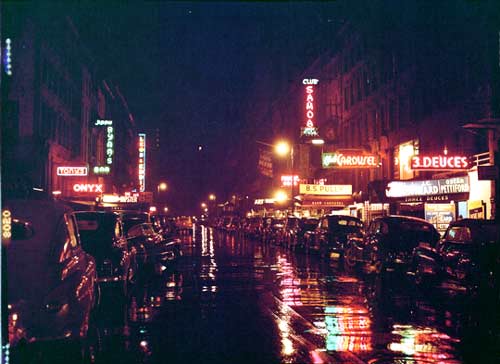
Der Block zur 52nd Street zwischen der 5. und 6. Avenue war im 20. Jahrhundert bekannt für seine vielen Jazzclubs und Bars, die das wilde Straßenleben in New York City in der ersten Hälfte dieses Jahrhunderts ausmachten.
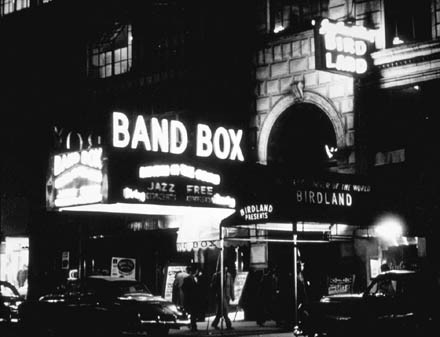
Die 52nd Street bestand ab Mitte der Vierziger Jahre aus den berühmtesten Jazzclubs Manhattans wie dem Birdland - benannt nach Charlie Parker -, Bop City, dem Downbeat, dem Royal Roost, dem Small’s Paradise oder dem Three Deuces. Es spielten hier in den Vierziger und Fünfziger Jahren Jazz Legenden wie Miles Davis, Dizzy Gillespie, Coleman Hawkins, Billie Holiday, Thelonious Monk , Charlie Parker, Art Tatum, Ben Webster and many other notable jazz musicians. This high quality of musicians made of this great road of jazz. could
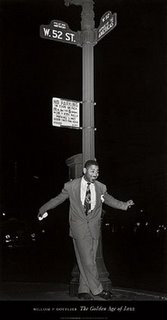 "The Street", as she was known simply by musicians and their audience was also known for their "after-hour jam sessions" experiment in which musicians again after their big band commitments according to your mood or improvise Thus, the rather bland and could escape to the time boring games in the Big Bands and Dance Orchestras of the country. There were no more rules, improvisation is very important and there was an interpretation of jazz music.
 Here therefore was the mid-forties the „Bebop“, angeführt vom Saxophonisten Charlie Parker , dem Trompeter Dizzy Gillespie , dem Pianisten Thelonious Monk und dem Schlagzeuger Kenny Clarke. Die Musik, die sich durch schnelle Tempi, komplizierte Harmonieschemata und einen höheren Stellenwert des Solisten als der Band charakterisiert wurde passte nur zu gut zur 52nd Street. Künstler wollten nicht mehr nur als Unterhalter gesehen werden, sie wollten als Künstler geachtet und anerkannt werden. Da die Musik bei vielen umstritten war und blanke Empörung auslöste konnte den Siegeszug der Jazzmusik in der 52nd Street in dieser Zeit jedoch auch nicht aufhalten.
Ende der späten Fünfziger Jahre zeigte sich dann jedoch mit the slow decline of jazz, a decline of 52nd Street. The jazz scene began to go like this and the rock and roll became more popular. Many jazz clubs on 52nd Street then began their processes to close because not enough viewers came and went because the clubs and after bankruptcy. Concluded the last club in 1968, its doors, ending a legendary capital of the jazz end of the sixties.
reminiscent of the past is no more. The 52nd Street is now full of banks, shops and other stores and thus show almost no traces of jazz of the fifties. As one of the few surviving clubs is still the "Birdland" the very day in New York City - now in a different place than it used to - do. But with the 52nd Street jazz disappeared for a short time and since the late seventies and New York is back to a functioning center of the jazz scene in the United States and around the world.


0 comments:
Post a Comment