 Percy Heath, the oldest of the three Heath Brothers, 30 April 1923 in Wilmington, North Carolina born, but spent his childhood in Philadelphia, Pennsylvania, where later his two younger brothers, Jimmy Heath and Albert "Tootie" Heath zur Welt kommen würden. Schon früh kommt der älteste Sohn der Familie mit der Musik in Berührung, sein Vater spielt Klarinette und seine Mutter singt im Kirchenchor und so liegt es nicht fern, dass auch Percy bald musikalisch einbezogen wird. Im Alter von 8 Jahren fängt er an Geige zu spielen, wobei er wie seine Mutter auch noch singt.
 Im Jahre 1944, also zur Zeit des grausamen Zweiten Weltkriegs in Europa und Asien, wird Percy dann im Alter von 21 Jahren in die U.S. Army befördert. In der Air Force ist er in der Tuskegee Airmen stationiert. Doch als der Krieg ein Jahr darauf endlich vorbei ist, verlässt Percy die Army schon wieder und fängt nun an, das Instrument zu erlerne, was ihn später berühmt machen sollte - The double bass. Fascinated by jazz players like Jimmy Blanton (the famous bass player in Duke Ellington's band), Oscar Pettiford and Ray Brown, he throws himself from the 1946 into the Philadelphia Granoff School of Music fully into the new instrument and is soon a hot tip on the bass in throughout the jazz scene in and around Philadelphia.
His first arrangement he plays it with the pianist Red Garland, later, by his involvement with the first legendary Miles Davis quintet of the fifties famous. A little later he will be the house bassist of the legendary Downbeat Club in Philadelphia.
His final breakthrough creates Percy then end of the Forties, as it him and his younger brother Jimmy in New York City - the world capital of jazz - attracts. The move of the trumpeter Howard McGhee, who offers both a place in his band, which does not reject them. The tour brings him together with McGhee in the following year also the first time to Europe, where they play at the Festival International de Jazz.
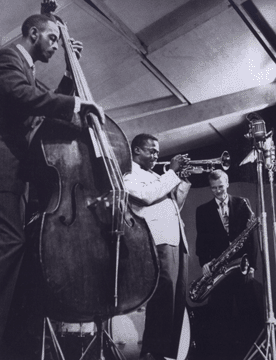
Back in New York in 1949, Percy has gone permanently to the greats of jazz. He plays with musicians such as Clifford Brown, Miles Davis, Thelonious Monk , Charlie Parker, Sonny Rollins and Horace Silver. The bebop trumpeter Dizzy Gillespie caught up with him in 1952 - this time with his younger brother Jimmy - in his Big Band, where he spent two years remains.
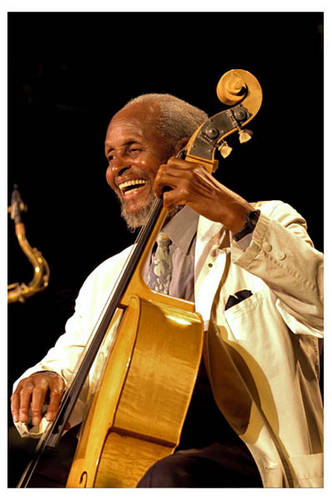
characterizes his career but especially the year 1951, when he becomes part of the Milt Jackson Quartet, with pianist John Lewis and drummer Kenny Clarke. The roots of this formation are already in Gillespie's band, Jackson, Lewis and Clarke were members. Percy Heath replaced first only the bassist Ray Brown, who left the band shortly before, then also an integral part of the group. A year later, the group names in the Modern Jazz Quartet (MJQ too short) to and is one of the most famous bands in the small combo jazz. In 1955, then forms the final formation of the Quartet, which is then also exist for many years: drummer Kenny Clarke is the drummer Connie Kay.
But it is not that Percy had arrived where he was one of the greatest bassists in jazz, he found himself on the way there. When Titan Bass Charles Mingus in the fifties, he learns a lot about the intonation on the bass, which is definitely also a breakthrough in helping the Modern Jazz Quartet. It followed 43 years, in which the Modern Jazz Quartet is active and presented to the American jazz on many international tours in the world.
In 1974, financial problems, however, ask the band to break up temporarily and take a rest. The pause vom MJQ nutzt Percy Heath jedoch, um endlich einmal eine Gruppe zusammen mit seinen beiden Brüdern Jimmy und Albert zu formatieren. Aus dieser Idee entsteht die Gruppe „The Heath Brothers“, die während des Zeitraums von 1975 bis 1982 regelmäßig zusammen auf der Bühne steht und Platten produziert. Für Percy Heath öffnet diese Zeit auch völlig andere Welten. Zur Gruppe steuert er sehr viele eigene Komposition wie zum Beispiel „The Watergate Blues“, „Rejoice“, „Move To The Groove“, „Islandized“ oder „Dave’s Haze“ bei und greift auch immer häufiger zum Cello.
Dissolve
When the Heath Brothers then starts the Modern Jazz Quartet - in the old formation, and new freshness - in 1983 again fully through and Percy Heath celebrates with Milt Jackson, John Lewis and Connie Kay on a Japan tour one of the largest success in all that time in the history of the band.
In 1994, then the drummer Connie Kay breaks off the first part of the legendary MJQ, on drums to replace him temporarily then Percy's brother Albert "Tootie", but as of 1999, the vibraphonist Milt Jackson dies, the magic of the legendary group's final of the past disappeared. Two years later, in 2001, then dies and the pianist John Lewis.
Even Percy Heath, now 78 years old already attracts more and more from the big music business and now spends much time in his native Long Iceland in New York. There are, though every now and then appeared in the New York jazz scene, especially with his younger brothers.
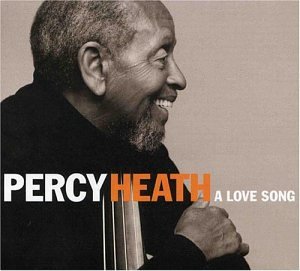
In 2004, then again following a unique highlight in his career. At the small jazz label, Jazz Daddy takes Percy Heath his very first album as a leader on - "A Love Song". Even if it is the only disk should remain as leader, to more than 300 different plates Heath is still with the Modern Jazz Quartet or simply to find just as a sideman and it here mostly in top form and an exuberant presence on the bass on.
On 28 April 2005 Percy Heath died in his home city of New York City of complications from bone cancer. With the death of the eldest member of the Heath family breaks away even the last part of the Modern Jazz Quartet and one of the most talented and versatile bass players in jazz history leaves the Jazz. But his spirit still lives in his recordings, the music of his two surviving brothers and in the thoughts of many who loved his music and were kind of playing.
More about the Heath Brothers: Here


0 comments:
Post a Comment